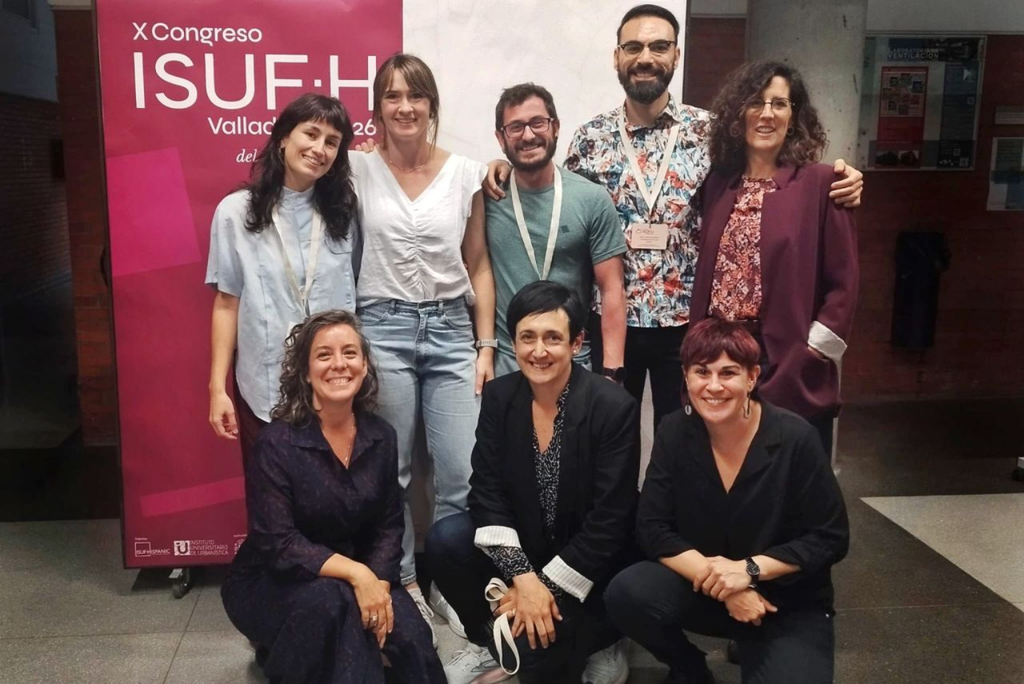
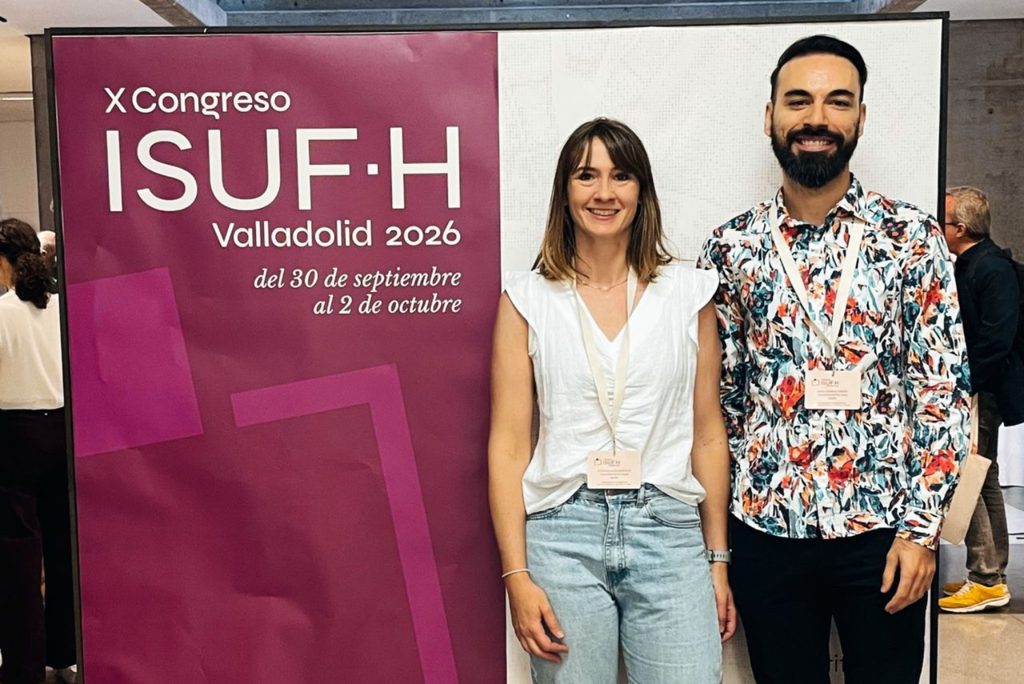
The CAVIAR EHU research group took part in the 10th ISUF-H Congress, held in Valladolid, Spain. The event brought together researchers from different institutions to share developments and findings in the fields of urban studies and urban form.
During the congress, several team members participated in parallel sessions, presenting their research and sharing findings on urban regeneration, public space quality, urban dynamics, and the relationship between food and changes in local commercial areas. The event provided a valuable opportunity to exchange knowledge, compare approaches and explore new opportunities for collaboration with other research teams.
Six Papers Addressing Contemporary Urban Challenges
The papers presented explored a range of issues related to the transformation of cities and neighbourhoods, from the analysis of socio-spatial dynamics to the development of tools for improving the quality of the urban environment.
The contributions were as follows:
- Isabel Guevara Fernández: Food and socio-spatial production: bread and the transformation of local commercial areas.
- Itziar Modrego Monforte, Mikel Barrena Herrán and Olatz Grijalba Aseguinolaza: The influence of municipality size on public space quality in the Basque Country: rethinking standards for urban regeneration.
- Itziar Modrego Monforte, Mikel Barrena Herrán and Olatz Grijalba Aseguinolaza: Analysing urban processes using digital data: spatiotemporal patterns of residents and tourists in Donostia-San Sebastián.
- Maitane Menayo Hurtado, Olatz Grijalba Aseguinolaza and Nagore Urrutia del Campo: Opengela: systematising and scaling up a neighbourhood-based office model for urban regeneration in the Basque Country.
- Nagore Urrutia del Campo, Izaskun Aseguinolaza Braga, Isabel Guevara Fernández and Irati Otamendi Irizar: Assessing public space quality and prioritising interventions in vulnerable neighbourhoods in the Basque Country.
- Aimar Santos Garcia and Izaskun Aseguinolaza Braga: In-between spaces for a more human-centred city: the effects of urban morphology and design on the creation of community networks.
Together, these six papers reflect the diversity of the group’s research and its interest in understanding urban processes from different perspectives, combining the study of public space, social dynamics, digital data and urban regeneration strategies.
Sharing Knowledge to Create More Liveable Cities
Participation in the 10th ISUF-H Congress enabled the CAVIAR EHU team to showcase its research findings, exchange perspectives with other academics and strengthen collaborative networks.
Events such as this help advance discussions on contemporary urban challenges and encourage the sharing of tools and approaches that can contribute to more liveable, inclusive and sustainable cities.