From 4 to 7 November 2026, the CAVIAR EHU research group took part in Zientzia Astea (EHU Science Week) with ‘Imagining the City’, a participatory initiative that brought together science, art and urban design to explore new ways of imagining and transforming public spaces.
The initiative invited school pupils and members of the public to take part in a co-creation process, reflecting on how urban environments could become more liveable, inclusive and sustainable. Through creativity and collective participation, the activity aimed to generate new ideas for improving real, recognisable urban spaces that currently offer limited urban quality but have considerable potential for transformation.
Three themes for rethinking urban spaces
The activity was structured around three key themes of urban design, each associated with a different colour:
Living the City (red): how to inhabit, enjoy and interact within public spaces.
Nature (green): how to integrate natural elements into the urban environment.
Water (blue): how to incorporate water and its potential into city design.
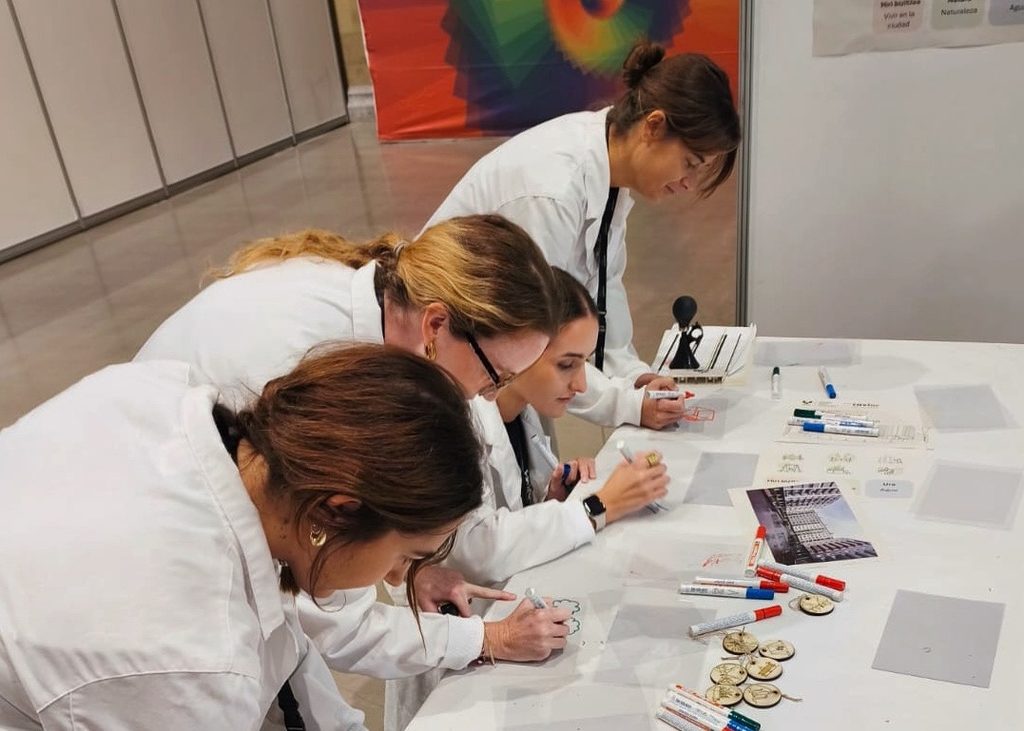
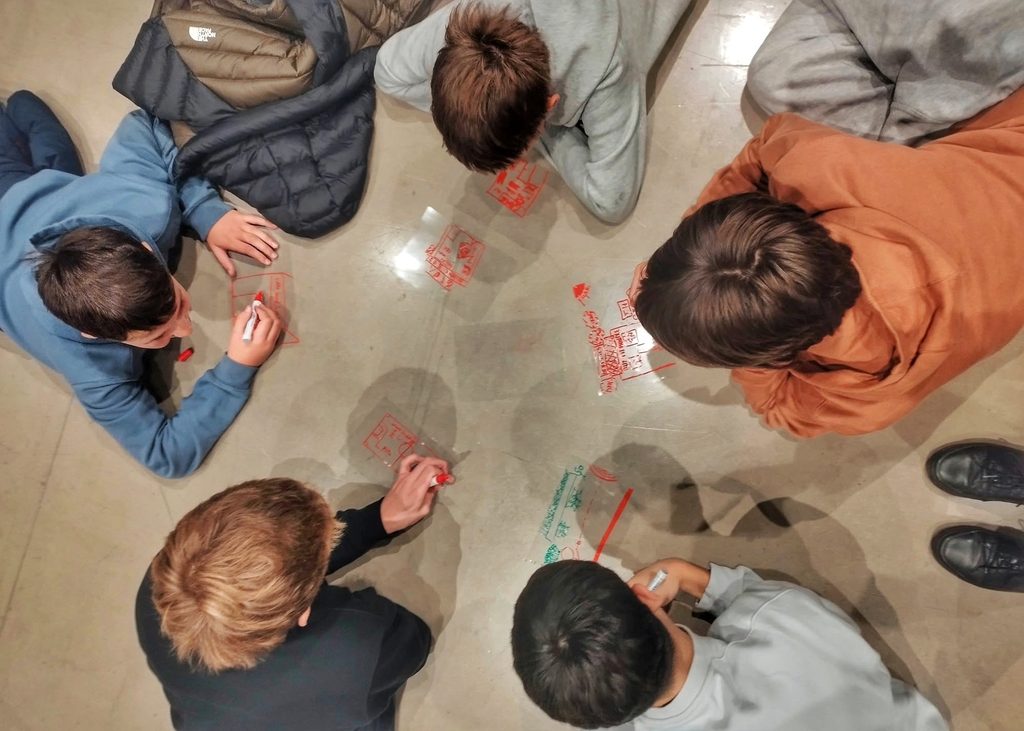
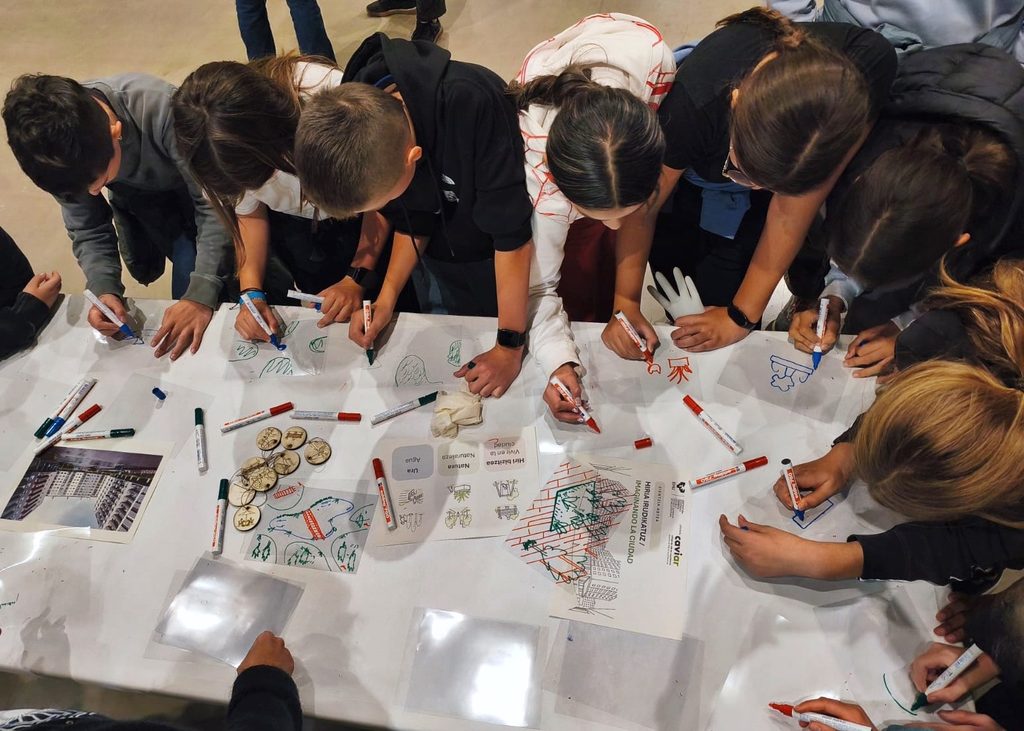
The initiative was organised into two complementary phases. The first, consisted of short, rotating workshops in which participants explored each of the three themes. Using coloured markers on transparent acetate sheets, they expressed their ideas and suggestions through drawings, illustrating the elements they considered essential for creating higher-quality public spaces.
To encourage creativity and participation, the workshops also included physical supporting materials, such as 3D-printed pieces and cut-out elements, which allowed participants to explore different design possibilities.
A collaborative mural created by everyone
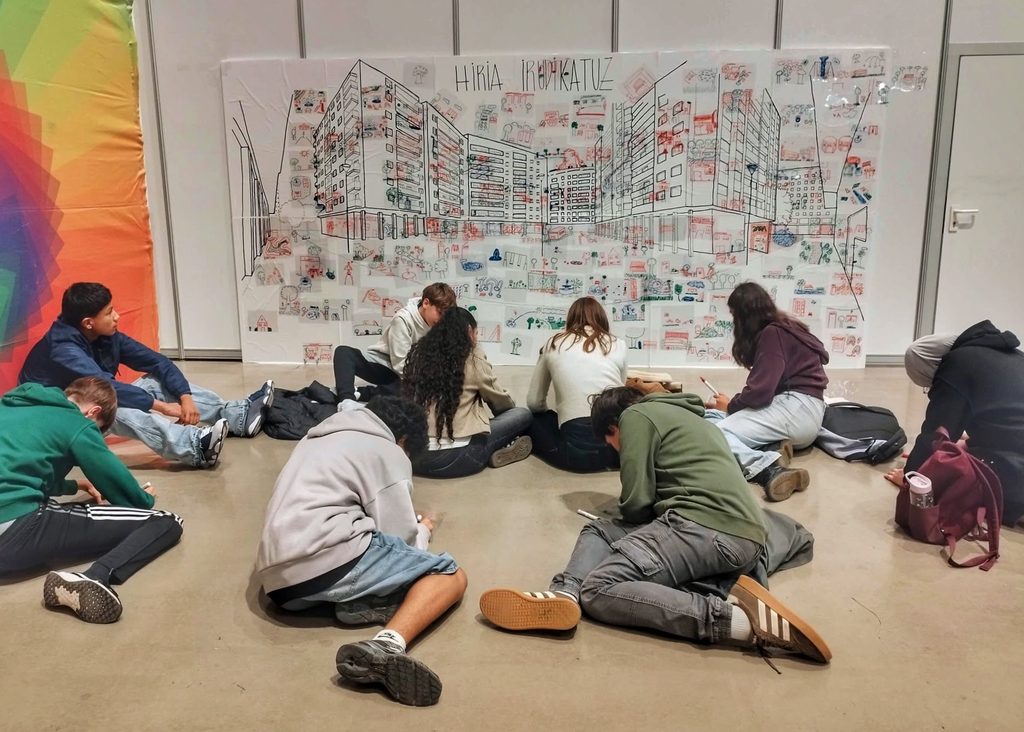
The second phase focused on gradually building a collaborative mural. The ideas generated during the workshops were incorporated into a base board depicting a real urban environment. By layering the different coloured acetate sheets, the various proposals could be combined to visualise potential urban regeneration strategies.
The mural thus became a collective representation of how the city could be transformed through the experiences, needs and visions of the people who inhabit it. Beyond its visual dimension, the activity also provided an opportunity for science communication, bringing together art and design as tools to make urban research more accessible to society.
Through ‘Imagining the City’, the research group promoted co-creation as a tool for rethinking public spaces and encouraging collective reflection on the challenges facing the cities of the future.